 The photographs in these railway photograph galleries are available for use under a Creative Commons Attribution-ShareAlike 4.0 International license. Attribution should include a link to www.nigeltout.com.
Snibston Discovery Museum - Inside
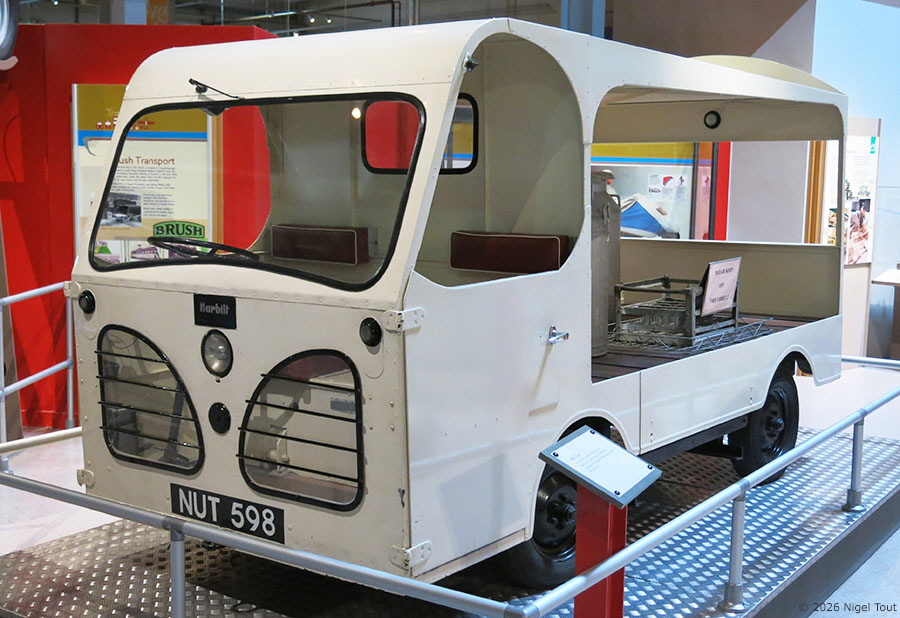
Battery powered milk float built by the Harborough Construction Company Ltd., Market Harborough, around the year 1956.
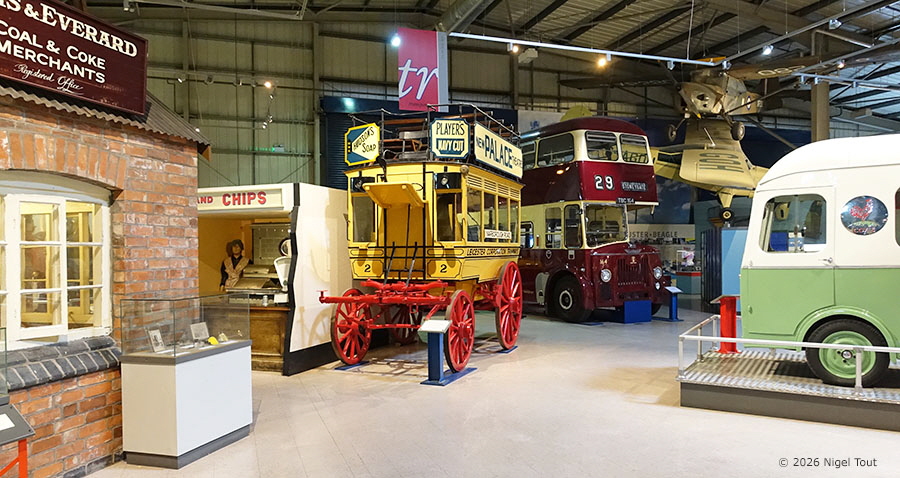
In the centre is a replica of a 19th century horse bus that operated in Leicester, built in 1932 for the Leicester pageant, while on its right is a Leyland Titan PD3/1 bus which was delivered new to Leicester City Transport in 1958.
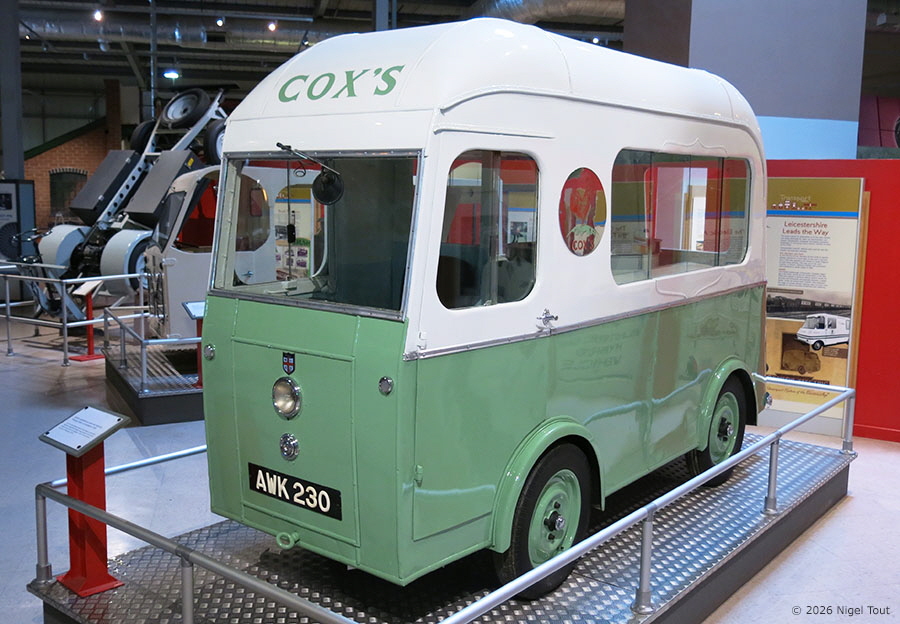
Battery powered ice cream van made by Partridge Wilson of Leicester in 1935. The original vehicle was used by Coventry Corporation Electricity Department before it was converted into an ice cream van by Cox’s of Leicester in 1947. It was used by Mr. Cox until the early 1970s.
Photographs of a selection of the exhibits inside the Snibston Discovery Museum before its closure in 2015.
In general, the exhibits in the museum were either manufactured or used locally.
Some of the captions here are derived from those on the actual items in the museum.
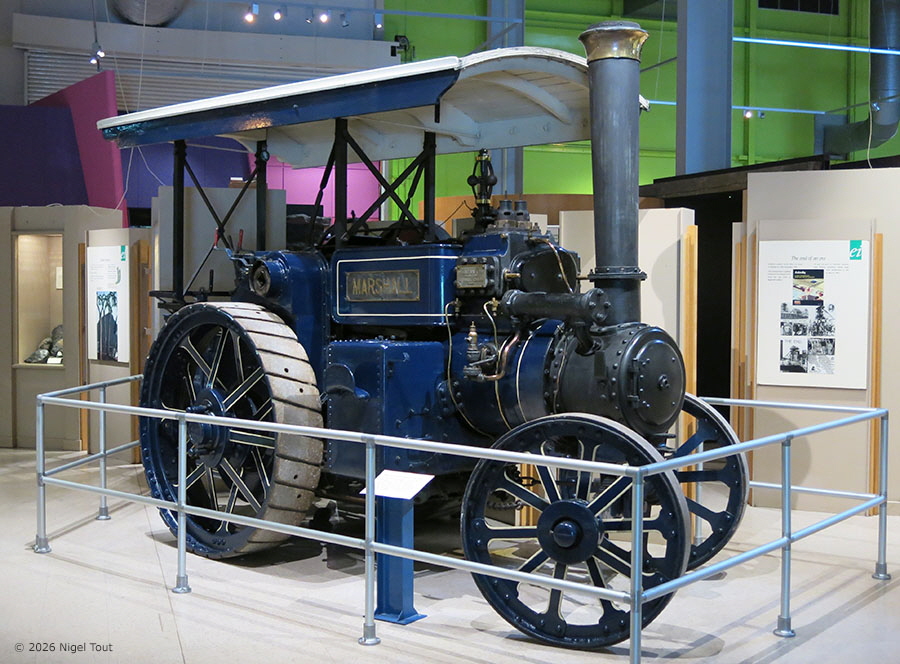
This 5 ton compound traction engine was built by Marshall & Co. Ltd., Gainsborough, Lincolnshire, in 1915. The engine was supplied to P&W Anderson of Glasgow. It was preserved in the late 1940’s by Ian Fraser of Arbroath and named ‘Jingling Geordie’. It was donated to Leicestershire Museums in 1976.
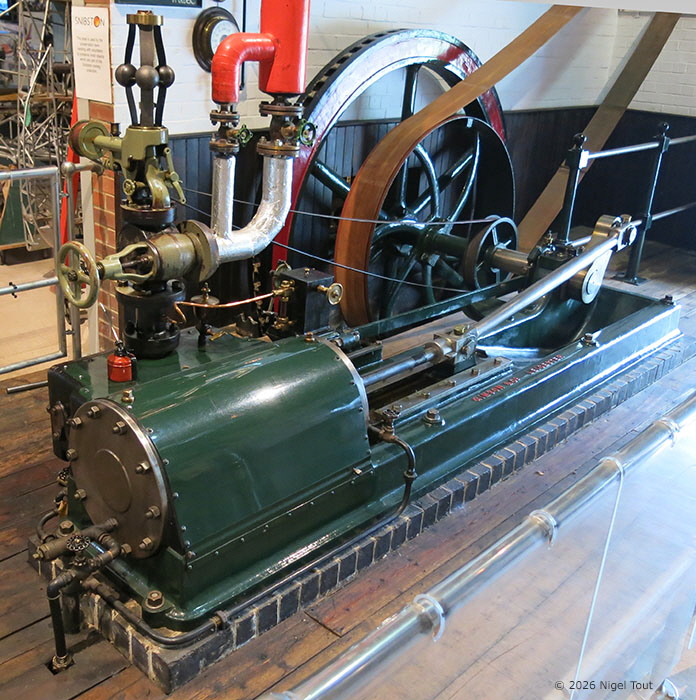
Horizontal single cylinder steam engine built by Gimson and Co. in Leicester in 1895. This engine operated at the Leicester hosiery firm of Chilprufe Ltd. where it was used to drive a series of machines until 1967. Its steam cylinder is 12 inches (305 mm) in diameter and the stroke of the piston is 24 inches (610mm).
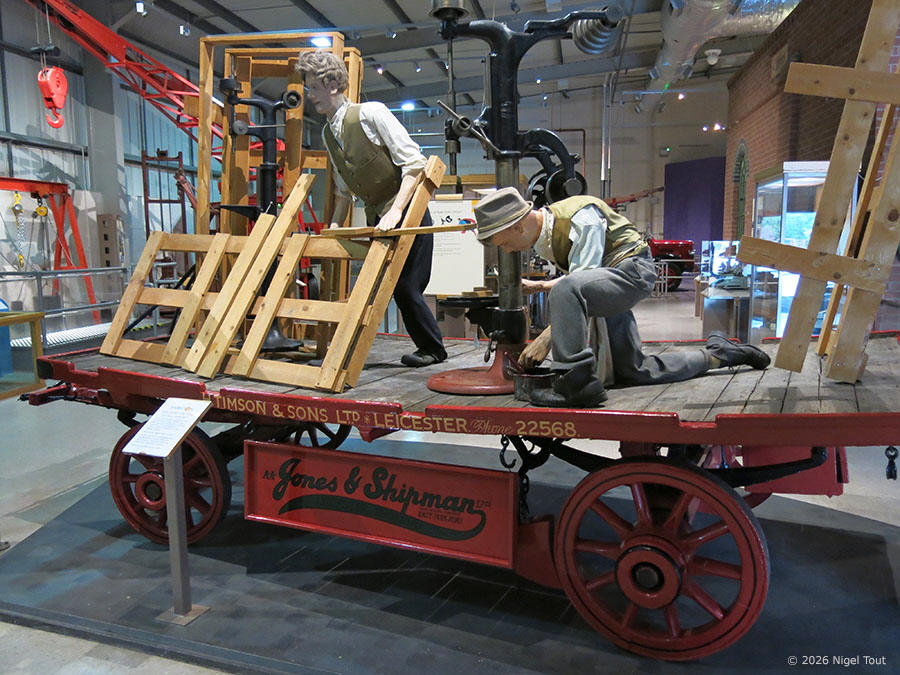
“DELIVERY ON TIME AT ALL COSTS!” ‘Harry and Horace, painters from the finishing shop, hastily put the finishing touches to a drilling machine in the customer’s colours before dispatch to the railway station. This scene dates from c.1920. Orders had to be completed and dispatched promptly from the New Century Works in Leicester to fulfill the Jones and Shipman promise... Delivery on time at all costs.’
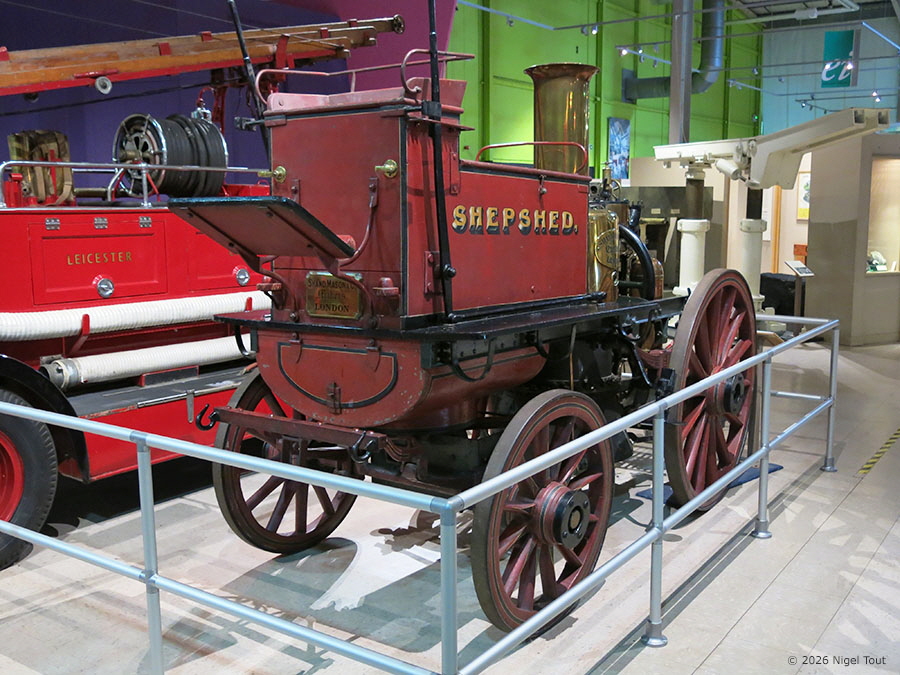
Horse-drawn steam fire engine, built in 1880 by Shand Mason of London for the London Fire Brigade. Steam operated pumps provide a steady jet of water to be directed at the fire. The water pressure is higher than is possible with the previous manual fire engines, giving more efficient firefighting. Following a serious fire at Shepshed in 1913 which clearly revealed the limitations of manually operated machines, Shepshed Fire Brigade acquired this vehicle in 1914. After service the vehicle was purchased by leicester Museums in 1937.
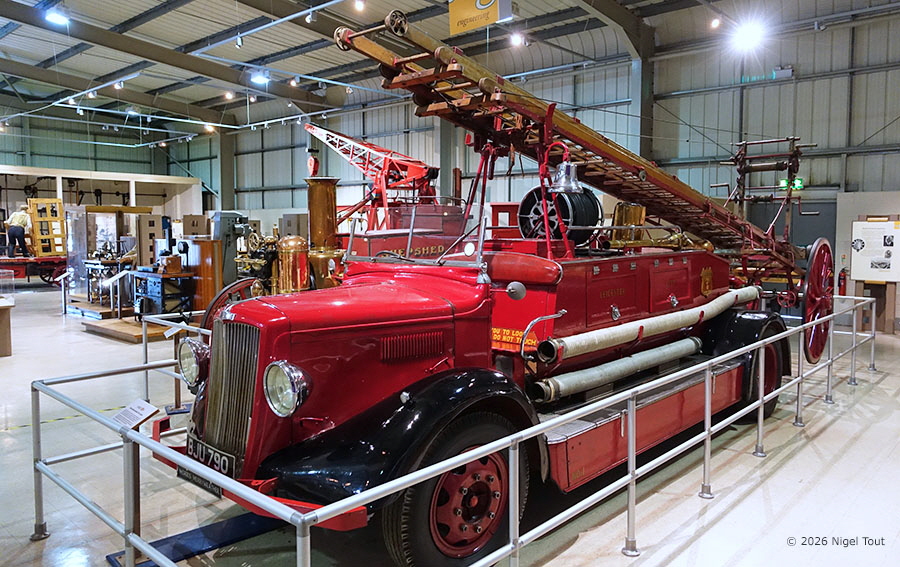
Morris/Merryweather Fire Engine, built in 1939 and used at the Mines Rescue Station, Ashby de la Zouch, until 1950 when it was sold to Leicester Fire Brigade. In 1955 it was transfered to fire training duties with the brigade. Upon withdrawal from service in 1967 the vehicle was presented to Leicester Museums. This fire engine is a rare example of its type and believed to be one of only three survivors. The body is by Merryweather of London with motor and chassis from Morris Motors, Cowley, Oxford.
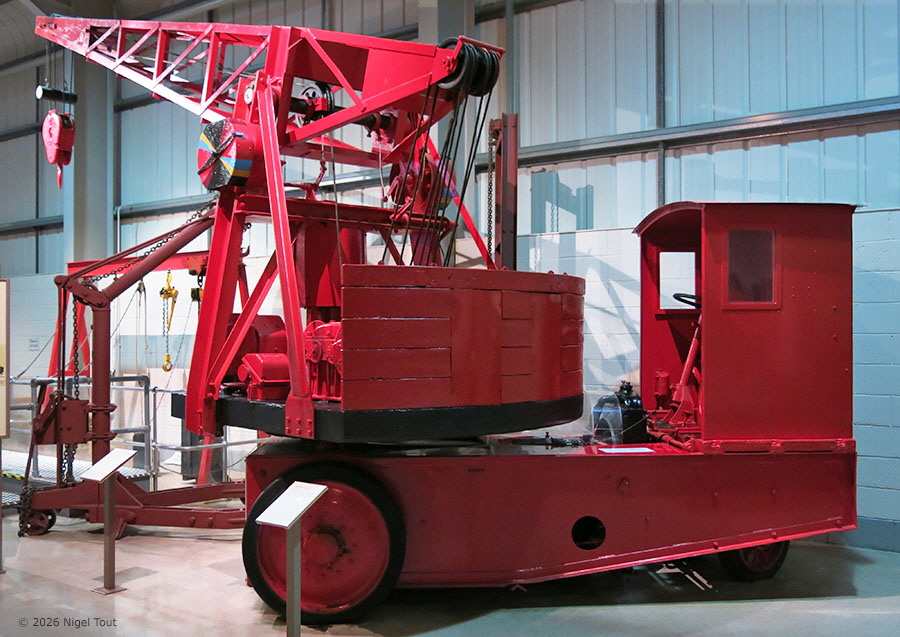
Mobile crane — ‘Versatile’ diesel electric powered yard crane. Normally used in factory stockyards, it was built in the 1940’s and has a lifting capacity of 4 tons.
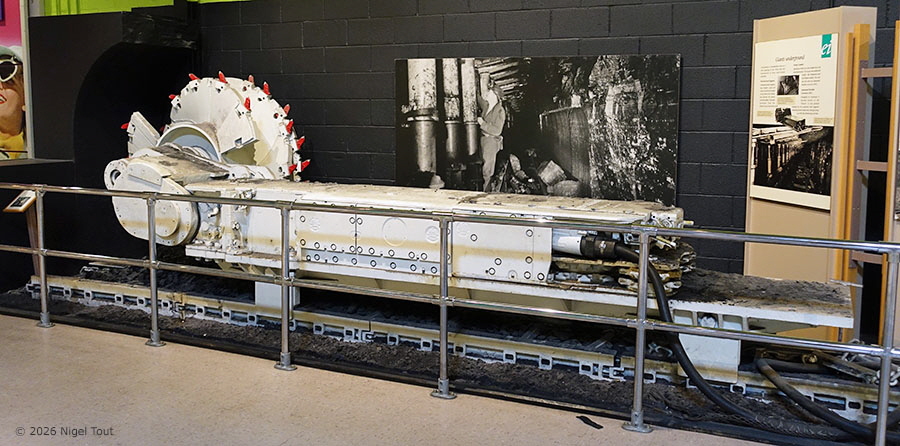
Shearer-Loader. Originally designed in the Lancashire coalfield by mining engineer James Anderton, this machine cut the coal and loaded it onto the armoured flexible conveyor. When introduced to the coal mines in the 1950s it could do the work normally carried out by over 30 miners using picks and shovels.
Click here to go to the page with several interactive panoramic photographs inside the museum.
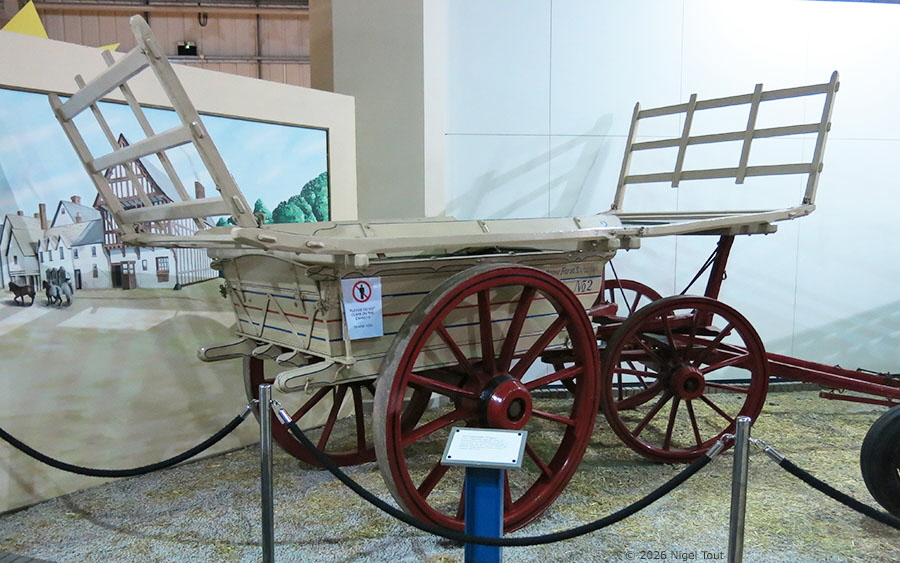
Hermaphrodite Waggon. A farm wagonette made by Insley of Shackerstone, Leicestershire, in 1922 at a cost of £40. The name ‘Hermaphrodite’ is derived from the fact that the vehicle has different characteristics, those of both a waggon and a cart.
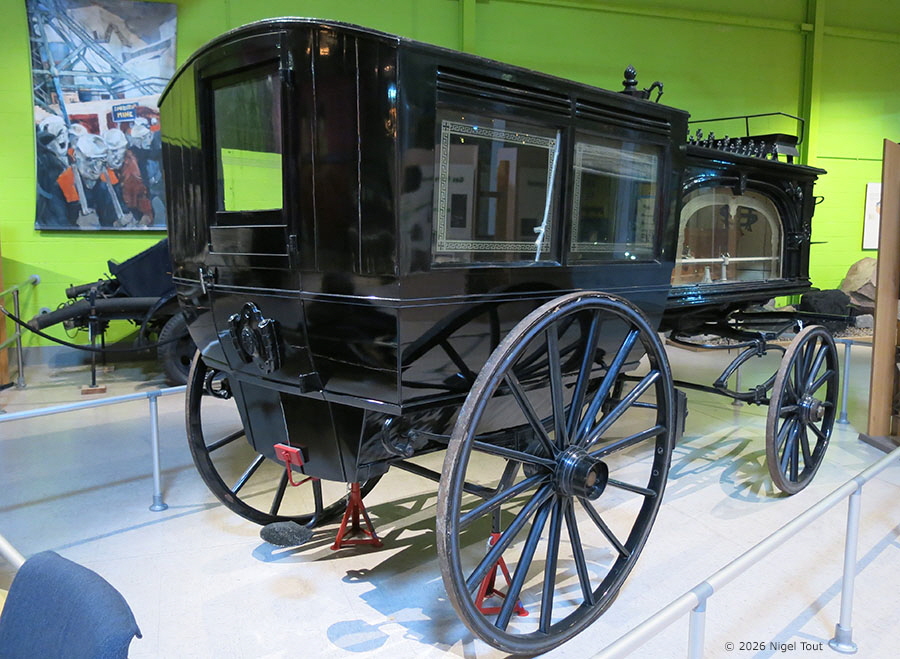
The Whitwick Hearse. This horse-drawn hearse has a special place in the history of Coalville. On April 19th 1898 Leicestershire witnessed its first and only mine disaster. An underground fire in the workings at Whitwick colliery set the coal and roof timbers alight. Flames, smoke and gasses trapped 35 miners who all died, suffocated by smoke. £5,000 was collected from local people for a relief fund to help the 20 widows and 94 children left by the men who were killed. The Colliery owners donated £500 and presented medals to those men who helped with the rescue. This hearse was made by Briers of Whitwick and was used in the funerals of the dead men. Its design was unusual since space was allowed for family mourners to travel in it.
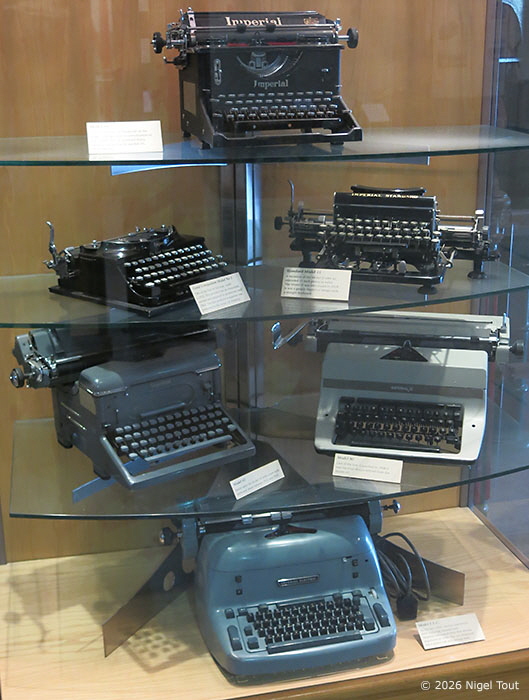
A selection of typewriters manufactured by Imperial Typewriter Company, Leicester.
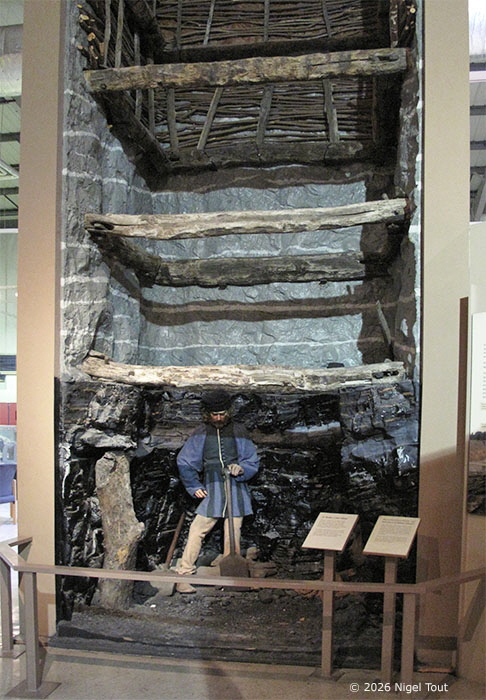
Reconstruction of a medieval mine shaft. The tunic that the miner is wearing is based on an original one discovered during opencast mining at the Lounge site near Coleorton, Leicestershire. The Coleorton Tunic is one of the oldest pieces of work clothing discovered in Britain and is especially significant. This woollen tabby-woven garment dates to around the 1550s
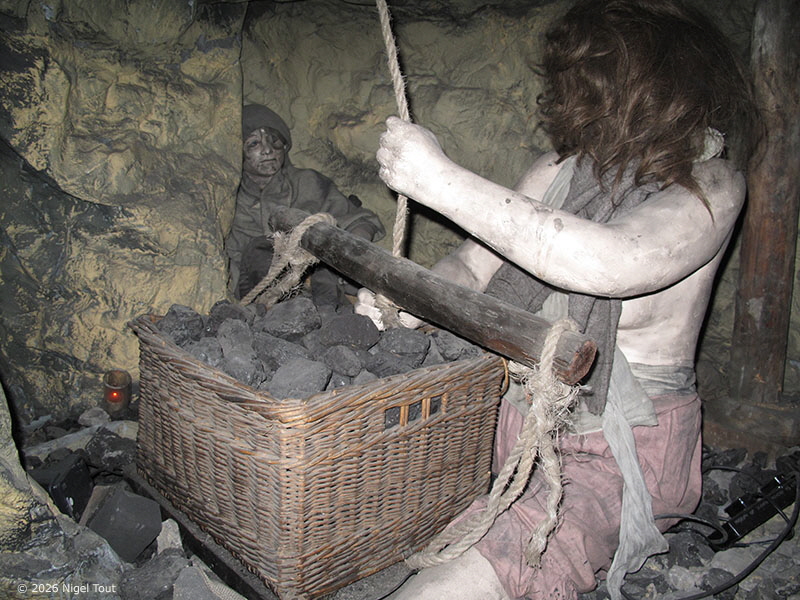
Reconstruction of children working in a coal seam in the 19th century.
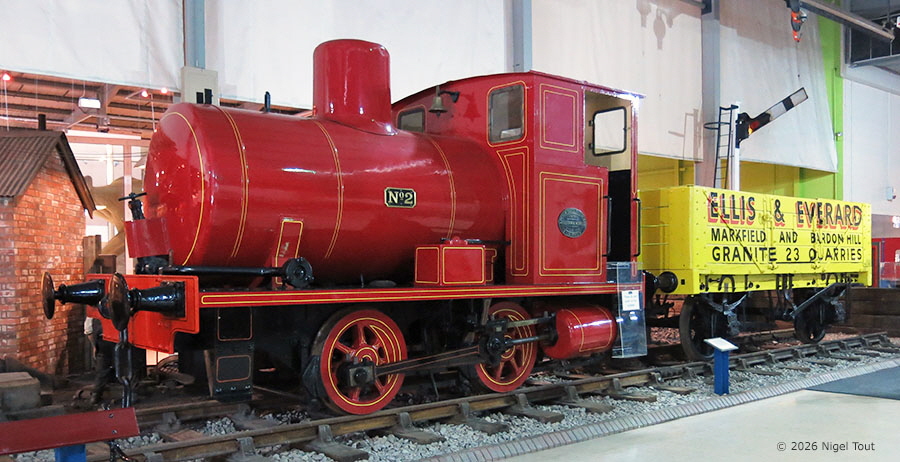
0-4-0 ‘Fireless’ locomotive No. 2, built by Andrew Barclay in 1924 and delivered new to the City of Leicester Electricity Dept. at the Freemans Meadow electricity generating station. It was a fireless locomotive, which means that instead of a boiler it has a steam accumulator which was charged up with steam from the power station boiler, and continued in service until 1972..
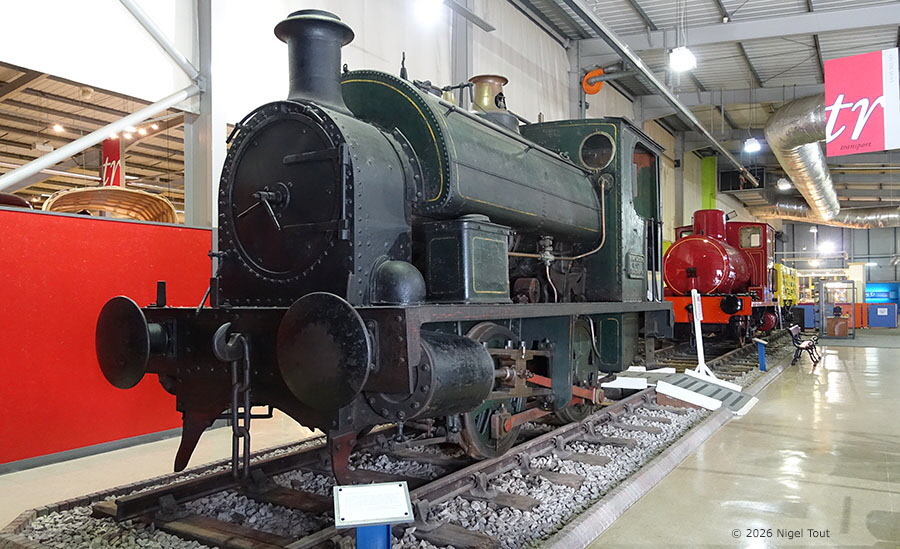
The second of two 0-4-0ST locomotives supplied by Brush engineering of Loughborough to Powlesland and Mason, at Swansea Harbour, in 1906. The locomotive was absorbed by the GWR in 1924 as its No. 921, and was sold out of service in 1928, finishing its working career with Berry Wiggins & Co, Kingsnorth, Kent, in the 1960s. It is now displayed at the Mountsorrel & Rothley Community Heritage Centre.
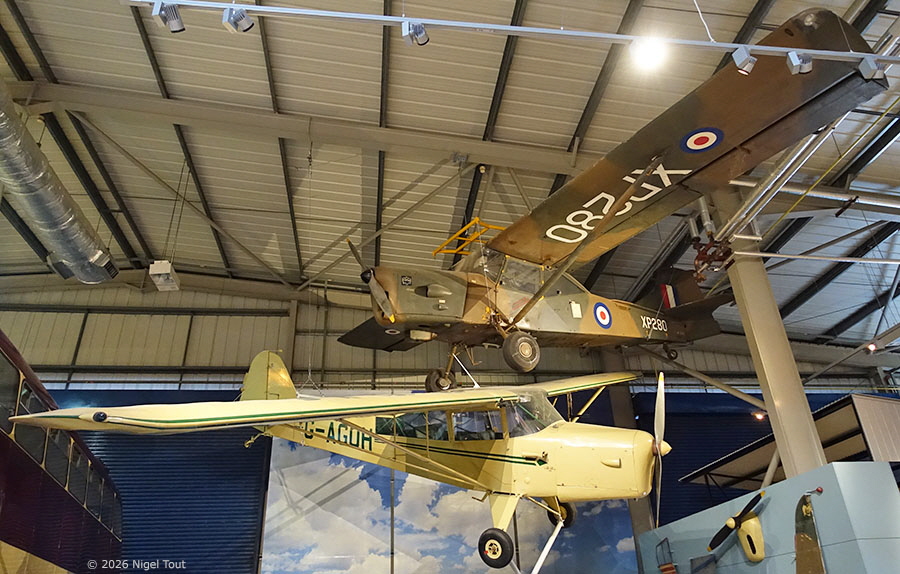
Auster AOP9 serial XP280 above and Auster J/1 Autocrat serial G-AGOH below. The Auster AOP9 was a British military air observation aircraft introduced in the mid-1950s and the Auster J/1 Autocrat is a high-wing touring monoplane from the mid-1940s. Both aircraft were manufactured by Auster Aircraft Limited at Rearsby, Leicestershire.
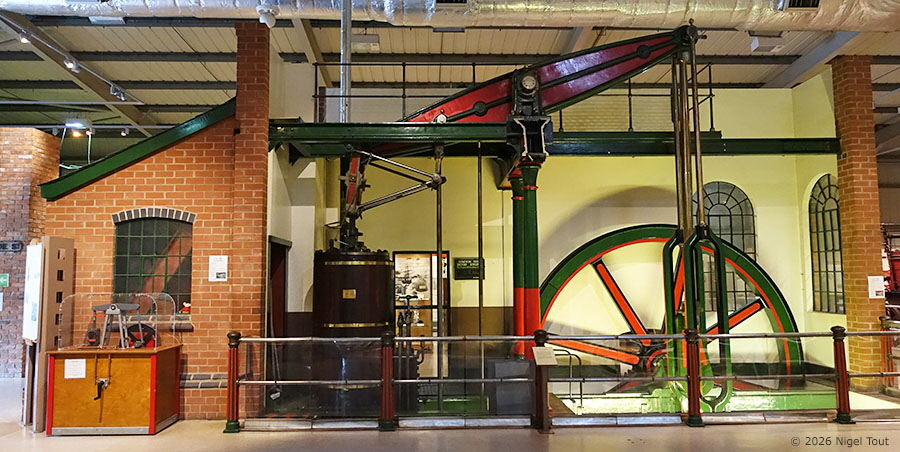
50-horsepower beam pumping engine built in 1880 by Gimson & Co. of Leicester for Hopwas Pumping Station, near Tamworth. It has a single-cylinder of 25-inch diameter with a 5-foot stroke, featuring a Meyer expansion slide valve. It ceased operation in 1964 and was moved to Snibston in 1987.
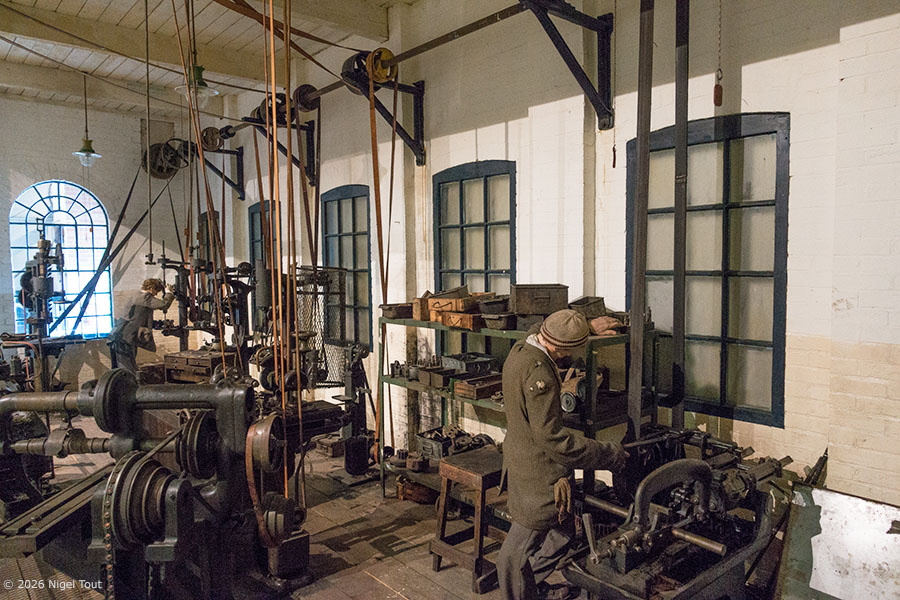
Reconstruction of a typical industrial machine shop of the late-19th/early-20th century with the metal-working machines powered by belts driven from overhead line shafting.
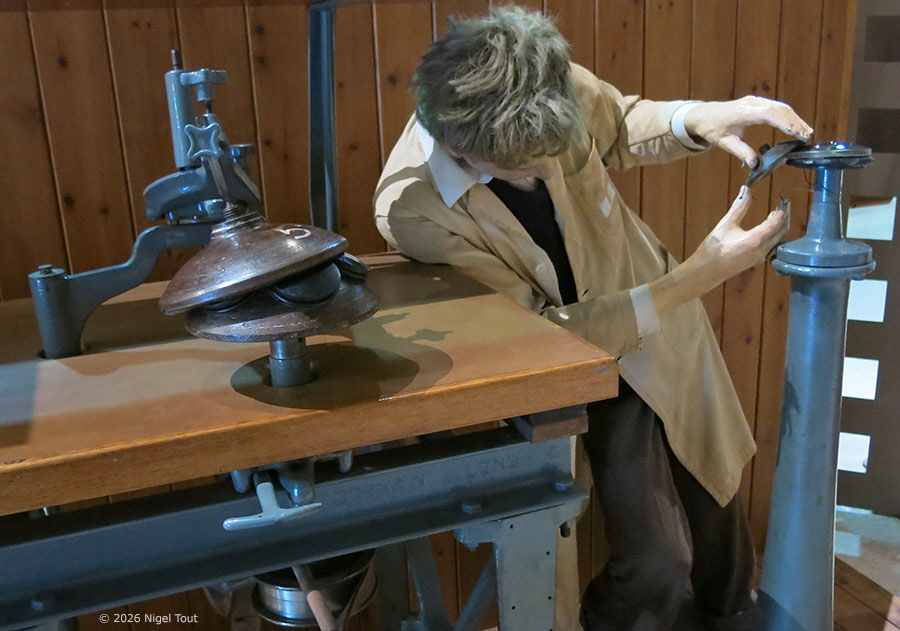
Belt-driven lens polishing machine built c.1920. It was used for polishing the surfaces of lenses enabling one craftsman to control the polishing of several blocks of lenses at the same time, and was used by Taylor Hobson of Leicester.
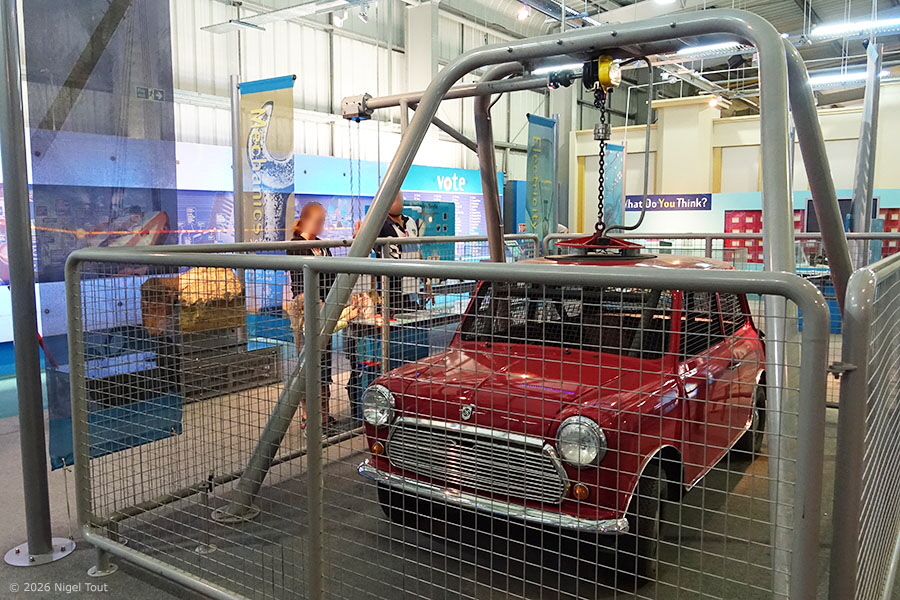
The museum had an interactive section. This exhibit demonstrated that by using a hand-operated winch with suitable gearing it was possible for a person to raise a car off the ground using muscle power.
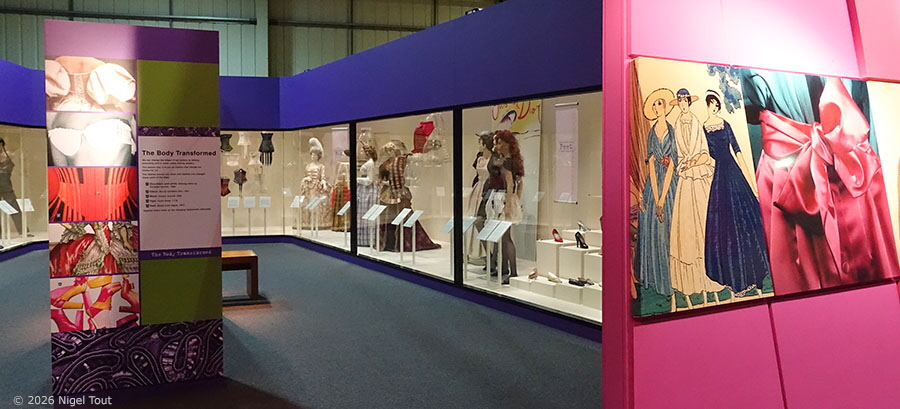
The Fashion Gallery at Snibston Discovery Park was the largest gallery of historic and contemporary fashion outside London. It displayed over 160 fully dressed, wigged and accessorised mannequins. The Symington collection, from R. & W.H. Symington of Market Harborough, was world class and offered an incredible opportunity to those who wished to reproduce period undergarments authentically.